
 Details worth reading.
Logo design
A logo designed for your business and its real uses, from profile pictures to printed material.
Explore the detailsBrand and design
Boxes, labels and print artwork, prepared to your producer’s specifications. Printing and manufacture are scoped separately.
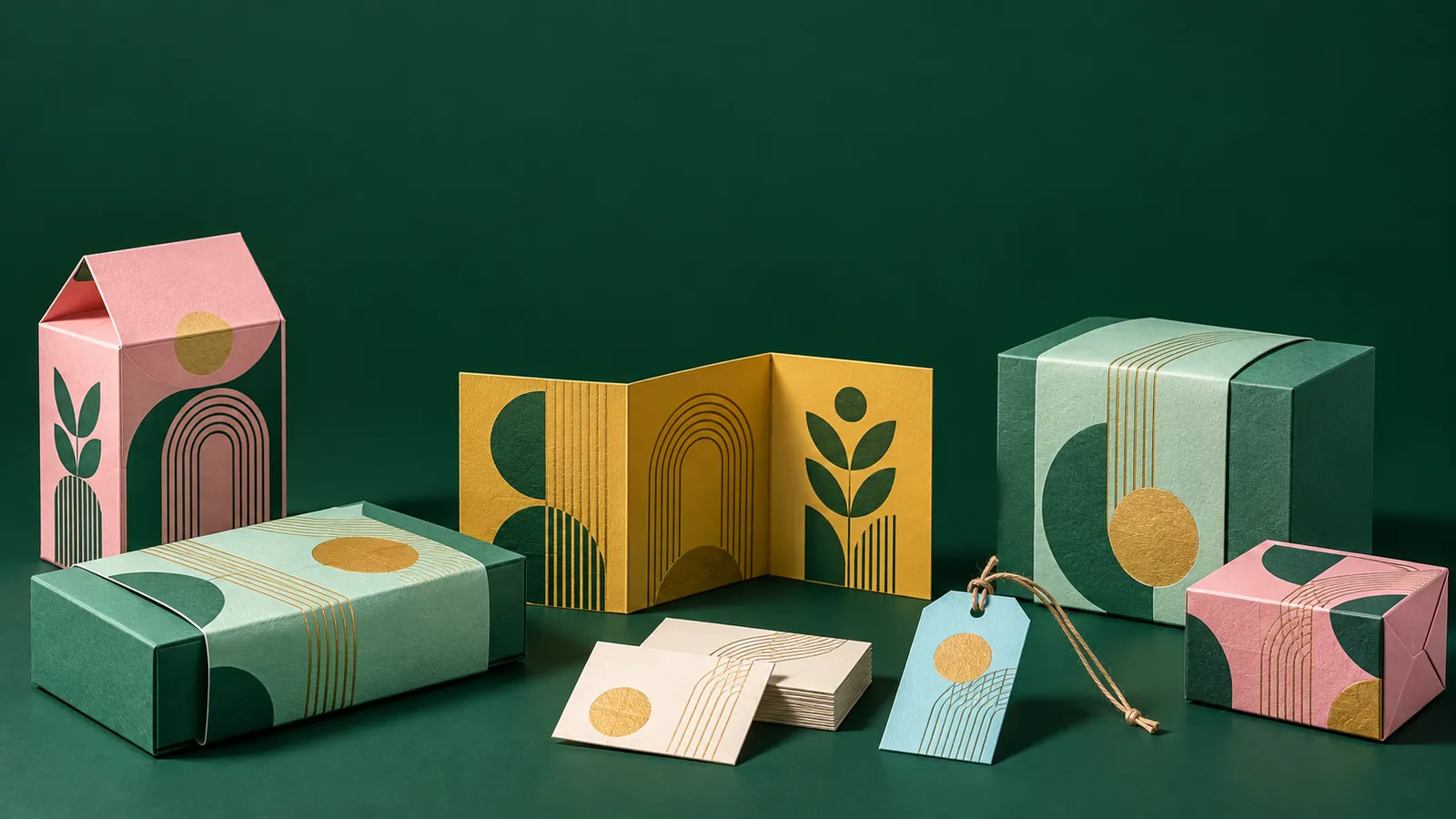
01 / Brand and design
One item or a coordinated range: define designs, faces, pages, product variants and languages. Design is distinct from manufacturing, printing and delivery.
Review identity, use and dimensions, obtaining an approved dieline from the producer where needed. Identify missing text, images and product data, and who approves them, before composing each face.
Present the visual direction and information hierarchy on the agreed item. Review faces, edges, folds and readability. Screen mockups illustrate the concept; they are not manufactured samples or colour approvals.
Check dimensions, bleed, fonts, images and export settings against the printer’s requirements. Supply named files and a review copy, identifying any physical proof or sample that the producer needs before a production run.
Review the design as production artwork, not only an attractive picture. Separate trim, background bleed and the content-safe area according to the producer’s specifications.
Trim marks the finished edge. The printer confirms its position and production tolerance.
Name each version before extending a design. A different size, language or construction may require a new layout, not simply a new product name.
A visual direction and information layout on the first agreed item.
Identify changing information, approved translations and faces for each version.
Review the production template and text space before defining adaptations.
Clear responsibilities keep an appealing mockup from being mistaken for an approval of unverified production details.
Adobe explains background bleed beyond trim; GS1 explains barcode placement and clear areas. Use requirements appropriate to the item: no universal allowance for every printer, or scanning guarantee from a digital image.
No printer or material chosen yet? Tell us. We will distinguish what can start now from the information needed for final artwork rather than inventing dimensions.
The core scope is design and agreed artwork preparation. Printing, materials, dielines, samples, freight and printer supervision are not automatically included. Any additional coordination or production must be explicitly scoped and quoted before commitment.
The appropriate supplier or manufacturer confirms dimensions, construction and the final dieline for the product and material. We compose artwork on the approved template. A visual concept is not structural engineering or a fit test; missing dielines affect what can begin and be delivered.
Screens, substrates, inks and finishes can change colour appearance. Artwork follows the producer’s requirements, but a digital mockup is not a colour-match guarantee. Where colour is critical, agree who obtains and approves a physical proof or sample before production.
We arrange approved content. The product owner supplies or approves accurate data, translations, codes and market-specific requirements, with specialist review where necessary. Writing and translation may be scoped separately. Design is not a compliance certificate or an official barcode issuing service.
Distinguish the main visual direction from its flavour, size or language variants, naming every version and its faces. Updating information within a system is different from a new construction or design direction; scope and cost are clarified before extending the range.
Agree print formats, review copies and any source files in advance. Editable files depend on scope, tools and font/image licences. Illustrative mockups never replace checking the production artwork and the printer’s physical proof.
Send the item type, variants, languages and available dimensions, plus product photographs or existing identity. We will clarify designs, files, revisions, timing, cost and any separate production responsibility.
Discuss print and packaging designAll Snuhy services